


Launching a new product is one of the most significant moments in a company’s growth journey. Whether you’re introducing a groundbreaking technology, a new consumer product, or an innovative service, the success of that launch can influence customer perception, media attention, and even future sales performance.
Yet many businesses make the mistake of treating a product launch as a simple announcement. They send an email, post on social media, update their website, and expect customers to take notice. In today’s crowded marketplace, that approach rarely works.
Modern consumers are overwhelmed with marketing messages. Every day they encounter countless advertisements, promotions, and product announcements competing for their attention. To stand out, brands need to create experiences rather than simply share information.
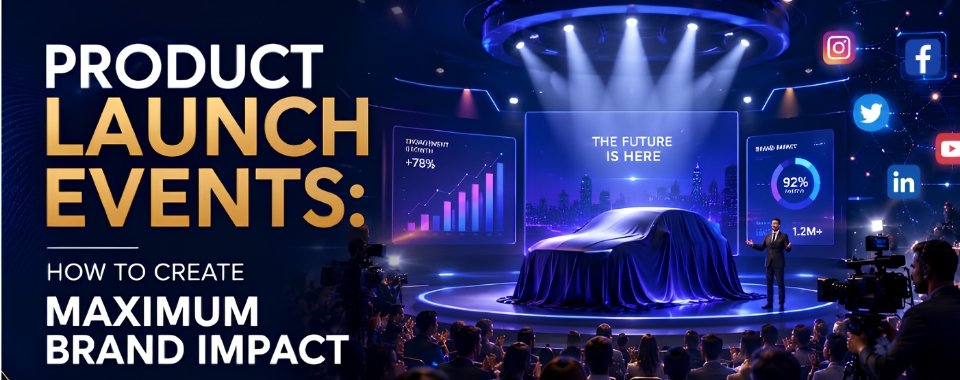
This is where product launch events become incredibly valuable. A well-executed launch event creates anticipation, generates conversation, encourages customer engagement, and transforms a product introduction into a memorable brand experience.
The most successful brands understand that people don’t just buy products—they buy stories, emotions, and experiences. A strategic product launch event helps create all three while strengthening long-term brand awareness and customer loyalty.
Why Product Launch Events Matter in Today’s Competitive Market
The purpose of a product launch event extends far beyond introducing a new offering. It creates an opportunity for brands to capture attention during a critical moment and shape how customers perceive both the product and the company behind it.
Unlike traditional advertising, launch events provide a platform for real interaction. Customers can see the product in action, ask questions, experience its benefits firsthand, and connect directly with the brand’s vision.
Product launch events are particularly powerful because they combine multiple marketing objectives into a single experience. They can generate media coverage, create social media buzz, attract potential customers, strengthen relationships with existing clients, and position a business as an industry leader.
Most importantly, launch events give brands control over the narrative. Rather than allowing the market to form opinions through scattered advertisements or online reviews, businesses can tell their story in a way that aligns with their goals and values.
The Relationship Between Product Launch Events and Brand Impact
When businesses think about launching a product, they often focus on features, pricing, and sales targets. While these elements are important, the true value of a launch event lies in its ability to strengthen the overall brand.
A successful product launch should answer more than just “What does this product do?” It should also answer “Why does this brand matter?”
Consider some of the world’s most recognized companies. Apple launches are rarely just about new devices. They are carefully crafted experiences that reinforce Apple’s commitment to innovation and simplicity. Tesla’s product unveilings focus on the future of mobility rather than technical specifications alone. Nike frequently combines product launches with immersive experiences that reinforce its message of performance and inspiration.
These brands understand that every launch event is an opportunity to build emotional connections.
When customers connect emotionally with a brand, they are more likely to remember it, recommend it, and remain loyal over time. This is where real brand impact is created.
Planning a Product Launch Event That Delivers Results
Every successful product launch event begins with a clear strategy. While creativity plays an important role, effective planning is what transforms ideas into meaningful outcomes.
The first step is identifying the primary objective of the event. Some businesses want to generate media attention, while others focus on lead generation, customer acquisition, or industry recognition. Defining success early helps shape every decision that follows.
Audience understanding is equally important. A product launch aimed at corporate decision-makers requires a very different approach than one designed for consumers. The venue, messaging, speakers, demonstrations, and overall experience should align with the expectations of the target audience.
Many growing businesses choose to work with a corporate event planner during this stage because launch events involve far more than logistics. From venue selection and event branding to audience engagement and technical production, experienced planners help ensure that every element supports the larger business objectives.
Timing also plays a crucial role. Launching too early can create expectations before a product is ready, while launching too late may result in missed opportunities. Successful brands carefully coordinate product readiness, marketing campaigns, media outreach, and event execution to maximize visibility.
Equally important is pre-event promotion. The most memorable product launches often begin weeks before the event itself. Teaser campaigns, countdown content, behind-the-scenes updates, and exclusive previews help build anticipation and create momentum long before attendees arrive.
How to Create Maximum Brand Impact During the Event
A launch event should do more than showcase a product. It should create an experience that attendees remember long after the event ends.
One of the most effective ways to achieve this is through storytelling.
Customers rarely connect with technical specifications alone. They connect with the challenges that inspired the product, the journey behind its development, and the positive impact it can have on their lives or businesses.
Instead of presenting a list of features, brands should focus on creating a narrative. What problem does the product solve? Why was it developed? How does it improve the customer’s experience? Answering these questions helps transform a product presentation into a meaningful story.
Experiential marketing is another powerful strategy for creating brand impact. Rather than simply telling attendees about a product, successful brands allow them to experience it firsthand.
Interactive demonstrations, hands-on product testing, immersive environments, and live showcases encourage deeper engagement. These experiences help customers develop a stronger understanding of the product while creating memorable moments that are more likely to be shared online.
This is another area where an experienced corporate event planner can add significant value. Designing immersive brand experiences requires a combination of creativity, technical expertise, and audience psychology. The goal is not simply to entertain attendees but to create moments that reinforce brand messaging and encourage genuine engagement.
Live demonstrations are particularly effective because they build trust. When attendees can see a product working in real-time, it reduces uncertainty and increases confidence in the brand’s claims.
Amplifying Reach Through Influencers, Social Media, and PR
The impact of a launch event shouldn’t end when attendees leave the venue.
In fact, some of the most valuable marketing opportunities occur before and after the event itself.
Social media plays a critical role in expanding reach. Brands should create content before the launch to build anticipation, provide live updates during the event, and continue sharing highlights afterward. Event-specific hashtags, livestreams, and user-generated content can dramatically increase visibility and engagement.
Influencer partnerships can also extend the event’s reach to highly targeted audiences. Because influencers have already established trust with their followers, their participation often adds credibility and encourages broader conversations around the product.
Media coverage remains equally important. Journalists and industry publications can introduce a product to audiences far beyond those attending the event. Providing exclusive insights, interviews, and compelling stories can help secure valuable press coverage that continues generating awareness long after the launch concludes.
When these channels work together, a single launch event can create weeks or even months of ongoing exposure.
Common Product Launch Mistakes That Limit Brand Impact
Despite investing significant resources, many businesses fail to maximize the value of their launch events because of avoidable mistakes.
One common mistake is making the event entirely product-focused. While attendees want to learn about the product, they also want to understand how it benefits them. Successful events focus on customer outcomes rather than product specifications alone.
Another mistake is neglecting audience engagement. Long presentations, excessive technical details, and limited interaction often result in lower engagement levels and reduced impact.
Many brands also underestimate the importance of follow-up. A successful launch event generates interest, but without post-event communication, much of that momentum can disappear quickly. Follow-up emails, exclusive offers, event recaps, and ongoing content help convert initial excitement into long-term customer relationships.
Finally, some businesses attempt to do everything themselves. Product launches involve numerous moving parts, from production and logistics to guest management and content creation. Partnering with a professional corporate event planner can help businesses avoid costly mistakes while delivering a more polished and impactful experience.
Measuring the Success of Your Product Launch Event
A packed venue and enthusiastic audience are encouraging signs, but true success should be measured through meaningful business outcomes.
Brand awareness metrics often provide the first indication of impact. Increased website traffic, social media mentions, media coverage, and branded search volume can reveal how effectively the launch expanded visibility.
Customer engagement metrics are equally important. Social interactions, content shares, event participation rates, and attendee feedback provide insight into how well the audience connected with the experience.
Lead generation and sales metrics help determine business value. Product inquiries, demo requests, qualified leads, pre-orders, and direct sales all contribute to understanding return on investment.
Customer sentiment should also be monitored carefully. Surveys, reviews, and social listening can provide valuable feedback regarding both the product and the overall event experience.
The most successful brands use these insights not only to evaluate current performance but also to improve future event marketing strategies.
Final Thoughts
A product launch event is far more than a marketing activity. It is an opportunity to introduce a product, tell a compelling story, and create meaningful connections with customers.
The brands that generate the greatest impact are not necessarily those with the largest budgets. They are the ones that understand how to create experiences that inspire engagement, conversation, and trust.
By combining strategic planning, experiential marketing, storytelling, influencer partnerships, media outreach, and thoughtful post-event engagement, businesses can transform product launches into powerful brand-building opportunities.
Whether you’re launching your first product or introducing the next evolution of an established brand, investing in a well-planned launch experience can significantly increase brand awareness, strengthen customer relationships, and drive long-term growth.
Ready to Create a Product Launch Event That Stands Out?
At NextMashup, we help businesses design impactful event marketing campaigns and memorable brand experiences that drive real results. Whether you need strategic guidance, experiential marketing support, or a trusted corporate event planner to bring your vision to life, our team can help you create a launch event that leaves a lasting impression.