


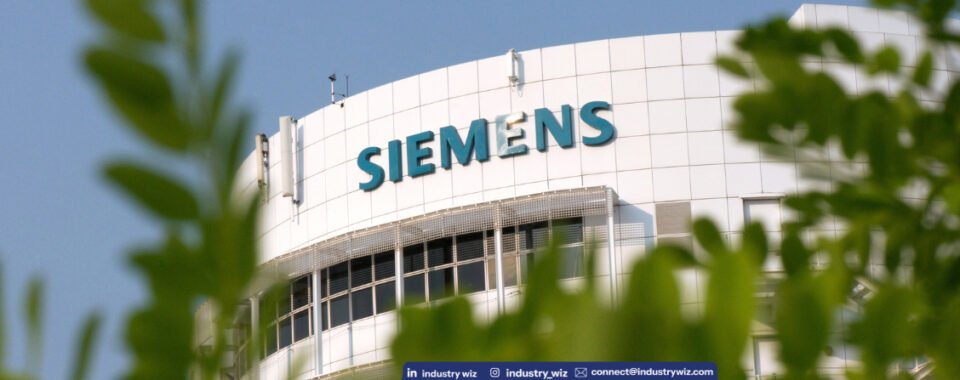
Siemens, in collaboration with TRIL Urban Transport Private Limited (Tata Group company) and other consortium members, delivered turnkey solutions for rail automation, rail electrification, and other related systems on the 23 kilometer Pune Metro Line 3 corridor that runs from Hinjewadi to Shivajinagar, in accordance with the India’s New Metro Rail Policy.
Technical Architecture & Operation Automation:
The consortium operated on a concession agreement issued by Pune Metropolitan Region Development Authority for construction, financing, and operation of the transit link under a joint venture. Under the joint venture arrangement, Siemens provided systems integration, telecommunication, workshop equipment, and a ten-year maintenance service for signaling and traction power systems.
The train motion along the 23-station elevated railway line is controlled by the Siemens Trainguard MT Communications Based Train Control technology. The rail system works according to the Grade of Automation 2 (GoA2) standards that involve automated acceleration, speed control and programmed train stop at stations under supervision of the driver. Continuous two-way radio communication between track-side and on-board devices calculates the dynamic safety envelopes and target brake profiles in order to achieve the reduced headway time and the ability to regulate the headway in real time. The design architecture allows the system to be upgraded to GoA4 driverless operation without replacing the basic track-side equipment.
Power Distribution and Subsystem Integration:
Traction power distribution system involves the use of 750V DC third-rail system rather than overhead catenary equipment as a physical clearance envelope of the elevated viaduct. The substation transformers and switchgear provide direct current supply to the contact collector shoes in the 22 trains.
Telecommunications Subsystem:
The telecommunications infrastructure combines multiple systems of operations into a single data backbone. The network synchronizes Terrestrial Trunked Radio (TETRA) voice and data communications for dispatch, closed-circuit television cameras, digital station management system, passenger information screens, and access control equipment. The integration protocol ensures that the diagnostic telemetry of the train-borne subsystems is streamed to the maintenance teams continuously.
Transit Capacity and Corridor Performance:
The transit corridor connects the residential and industrial locations, providing relief from road congestion on the route connecting the Hinjewadi technology hub and the central Shivajinagar transport hub. Operational modeling shows that regulated train traffic with grade separation cuts one-way travel times by 50 percent compared to surface road transit.
According to Soulier, the executive vice president of Turnkey Business at Siemens Mobility, the use of integration and project management expertise in the CBTC system provides travel time savings of close to 50 percent.
Optimized headway and automated braking reduce energy usage on a per passenger kilometer basis without reducing capacity during peak travel times.