


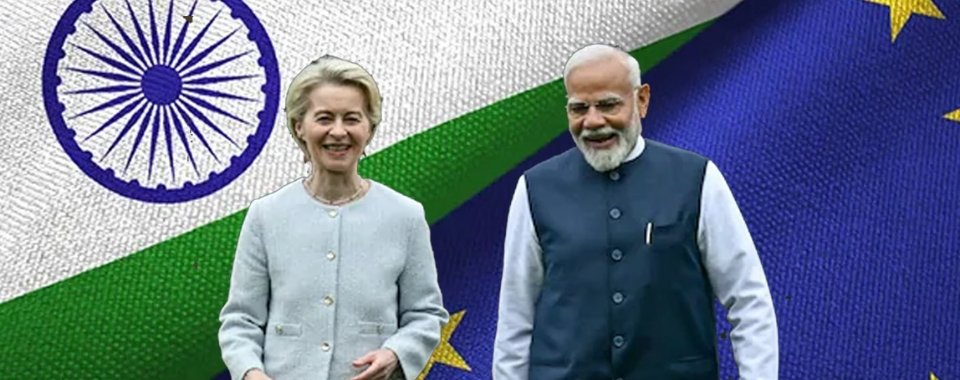
Talks between India and the European Union regarding a much-awaited free trade agreement (FTA) are on the cusp of being concluded imminently, marking the beginning of a fresh chapter in bilateral economic relations. It has taken almost two decades of on-and-off talks for the two parties to finally agree on the deal, which will be formalized during the India-EU summit in New Delhi later this month.
A more feasible trade agreement:
India and the EU have been holding negotiations since the early 2000s, with talks restarting in earnest from 2022 after a long break. The new agreement, expected to be announced at the upcoming summit between India and the EU leadership, is expected to lower tariff and non-tariff barriers for a broad range of products and services. This comes against the backdrop of renewed global interest in trade diversification in light of new geopolitical and protectionist pressures, including the latest tariff hikes in other large markets.
Representatives from both sides have confirmed that the FTA will help lower tariffs on major EU exports such as cars and wine, while also opening up new market access for Indian exports such as textiles, electronics, chemicals, and jewelry. Industry insiders have suggested that the new agreement will help make Indian industries, which have traditionally faced higher tariffs in the EU market, more competitive once the agreement is fully operational.
The pact is likely to provide opportunities for India’s labor-intensive sectors. Textiles and apparel, sectors in which Indian exporters are currently facing a large tariff disadvantage compared to other exporters such as Bangladesh and Vietnam, may benefit from the FTA. The sector’s leaders have underlined the importance of zero-duty access to Europe’s large consumer market.
Sectoral effects on trade and manufacturing:
Regarding the manufacturing community, tariff realignment could shrink the cost of inputs and expand the integration of the value chain. Based on trade research, the Indian imports from the EU are dominated by capital and technology-intensive products like machinery, aircraft components, and industrial control systems. Improved access to such inputs could help reduce the cost of production for the Indian industrial clusters and MSME suppliers, making them more globally competitive.
On the other hand, Indian exports of electronics, pharmaceuticals, auto parts, and refined fuels to the EU already comprise a large share of the bilateral trade. A reduction in trade barriers is expected to boost growth in these sectors, although agricultural products and the automotive sector could be exempted from the trade barriers through phased or negotiated exclusions.
Although there has been progress, trade negotiators have had to deal with complex issues such as non-tariff barriers, regulatory alignment, and the EU’s carbon border adjustment mechanism. These factors are a part of the EU’s overall policy initiatives for internal climate regulation, which could continue to shape the finer details of the trade negotiation process.
Consequences for international supply chains and strategic partnerships:
The India-EU agreement is viewed as a strategic complement to other trade initiatives pursued by India, such as the recent agreements with the UK, Australia, and other countries. Although the agreement is not expected to replace the current trade negotiations with the United States or other markets, it further cements India’s commitment to expanding its economic relationships and avoiding overdependence on any one trading partner.
The EU leaders have emphasized the importance of having greater access to the vast consumer market and dynamic services sector in India, which includes IT, telecommunication, and high-end business services. However, the EU also has the opportunity to diversify its supply chains, especially in areas such as the automotive and renewable energy sectors, by incorporating Indian exports into the European value chains.
For Indian manufacturing, especially in the electronics and textile sectors, the successful implementation of the agreement could lead to increased production capacities and investment inflows. The expected rise in the volume of trade between the two countries, which could reach USD 200-250 billion in the next decade, is expected to attract more investment into India’s industrial corridors.
The legislative roadmap and next steps:
Although the conclusion of the pact at the summit will represent a political agreement, the actual ratification process, especially within the European Parliament, may take at least a year. During this time, both parties will have to establish enabling domestic regulations and frameworks to implement tariff lines and regulatory harmonization.
Industry analysts have also pointed out that the need for greater clarity on implementation timelines and transitional arrangements will be essential to actualize expected benefits. Indian exporters and producers will be keenly awaiting information on safeguard policies, adjustment assistance, and specific guidelines as the pact is ready for legal implementation.
In conclusion, the imminent conclusion of the India-EU free trade agreement is a significant strategic achievement for both parties, with far-reaching implications for trade, manufacturing competitiveness, and economic integration.