



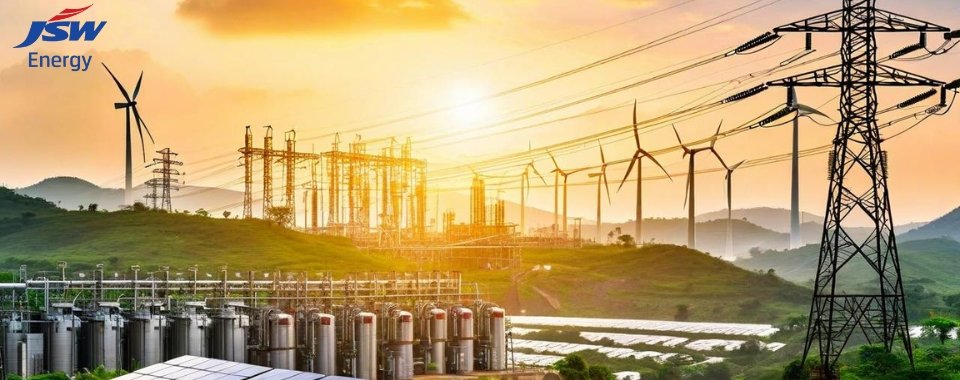
JSW Energy has announced a massive capital raise of ₹3,000 crores via a preferential allotment to JTPM Metal Traders Limited. This capital raise is strategically planned to fuel the company’s aggressive expansion plans in renewable and energy storage capacities, in line with the company’s ‘Strategy 3.0’ to achieve 30 GW by 2030. This capital raise is announced as analysts remain bullish on the company, with an average price target indicating upside potential, despite the higher P/E ratio of the company compared to its sector peers. This capital raise by JSW Energy will help the company tap into the growing demand for energy transition in India, a sector that is growing at a healthy clip driven by national targets and industrialization.
The successful completion of JSW Energy’s preferential allotment of ₹3,000 crores is a significant milestone for the company, marking a major step in its aggressive growth plans. This capital raise is not only a capital raise for the company, as many may perceive it, but rather a strategic play to aggressively fuel the company’s growth into a major player in the Indian energy sector, which is undergoing a massive transformation.
The decision of JSW Energy to raise funds of approximately ₹3,000 crore through a preferential issue of equity shares and convertible warrants on the company’s equity shares in favor of JTPM Metal Traders Limited is intrinsically linked with the forward-looking ‘Strategy 3.0’ of the company, which aims at a huge scaling-up of its power generation capacity to 30 GW and 40 GWh of energy storage capacity by fiscal year 2030, with an estimated capital expenditure of ₹1.3 lakh crore to be incurred between FY2026 and FY2030. This issue is directly in line with the execution of this strategy, particularly in scaling up the power generation capacity through the increasing levels of renewable energy sources like solar and wind power, and the creation of critical energy storage solutions. The company has also achieved a huge milestone in the execution of this strategy by increasing its power capacity to over 10 GW by the end of FY2025, with renewables contributing 56 percent to its capacity, and has further scaled it up to 12.8 GW in July 2025. As on early March 2026, the company’s shares are showing a positive trend and are trading between ₹468 and ₹496.
JSW Energy is a part of the evolving Indian energy sector, which is on the cusp of a major expansion, with the demand for electricity set to rise at a rate of 6.4%. This is driven by a number of factors, including the rise of the industrial sector, electrification, and the emergence of data centers. Furthermore, the Indian government has set a target of 500 GW of non-fossil fuel-based capacity to be achieved by the year 2030, which is a major boost to the renewable segment, in which the company is investing heavily. Other competitors, like NTPC Limited, Adani Green Energy Limited (aiming to achieve 50 GW capacity by 2030), and Tata Power, are also investing heavily in the sector. However, the sector is not without its challenges, and the grid is one of the major issues, with a lot of investment needed in the transmission segment. The P/E ratio of JSW Energy, which is in the mid-30s, with a TTM of 36.6 and a current P/E of 32.50, is considerably higher than the sector average, which is around 22.04, indicating that the company is set to achieve substantial growth in the future. However, analysts are still somewhat positive about the stock, with a mean target price of ₹569-₹599, indicating a potential uptrend. This is in line with the new direction JSW Energy has taken, shifting its focus to renewable energy, which is expected to boost its future performance, even after a QIP of ₹5,000 crore in April 2024.
The Forensic Bear Case: Debt, Execution, and Margin Pressures:
Despite the overall positive picture, JSW Energy is facing some challenges as well. The high capital expenditure plans, though necessary for growth, also come with a price, i.e., debt. The net debt/equity ratio for the company, as of March 2025, is at 1.6, and as of September 2025, it is reported to be at 1.82, with increasing finance costs. Reports also suggest that the earnings may not be sufficient to cover finance costs as well. Secondly, the operating efficiency of the company is also under some pressure, with EBITDA margins coming down to 37.8% in Q4 FY2025 from 42.4% YoY. Though the company has a good track record of increasing profits, its sales growth over the last three years has been low, i.e., at 2.64%. The execution of its massive plans is of prime importance, and any delay in execution may impact its overall valuation and ability to achieve its aggressive plans. Secondly, the overall energy costs and competition may impact its overall margins for its thermal power, as it still has a major share of its overall power generation coming from thermal power alone. Given its growth aspirations and higher P/E valuation, some may consider the company’s recent return on equity (ROE) of 6–8% to be reasonable.
JSW Energy appears to be well-placed to tap into the increasing energy demand in India, which is being fueled by its strong commitment to renewable energy and energy storage solutions. The ‘Strategy 3.0’ plan, along with the recent infusion of capital, is part of a larger plan to achieve its goal of reaching a capacity of 30 GW by the year 2030. Analysts are quite positive about the stock, with a consensus ‘Outperform’ rating, while the average target prices indicate a potential upside of 20-23% from the prices prevailing in early March 2026. The continued commitment to ‘Green Energy’ solutions, along with the overall favorable policies being pursued by the Indian government, has led to this positive sentiment.