


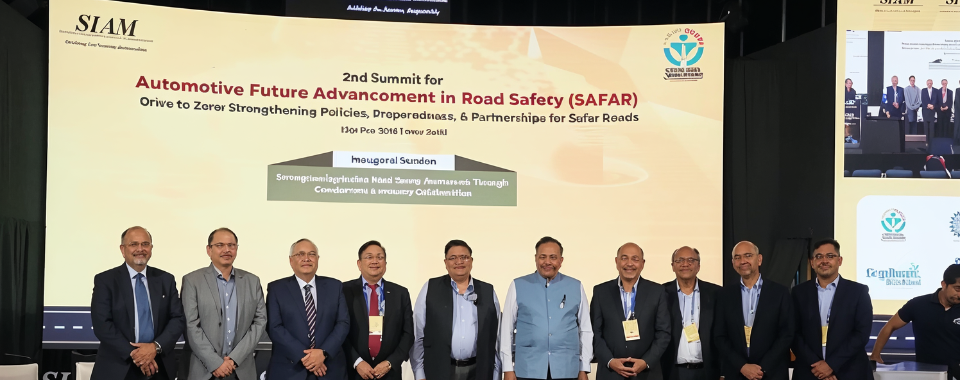
Society of Indian Automobile Manufacturers marked the end of its Sustainability Week 2026 with the 1st International Conference on Automotive Material Compliance and Sustainability in New Delhi. The conference, organized at India Habitat Centre, saw the coming together of regulators, OEMs, component suppliers, technology companies, and policymakers to discuss material traceability, end of life vehicle regulations, and digital supply chain solutions.
The conference theme, “Driving Circularity, Compliance, and Innovation in the Global Automotive Supply Chain,” highlighted the increasing regulatory push on the industry to conform to global sustainability norms.
Policy push for circularity and ELV compliance:
Inaugurating the conference, SIAM representatives emphasized the need for India, as the third-largest automobile market in the world, to synchronize its growth with environmental goals. The conference focused on the End of Life Vehicles Rules 2025, organized vehicle scrapping, and resource recovery systems.
Industry representatives emphasized the need to incorporate circular economy thinking into designs from the outset. The importance of registered vehicle scrapping facilities and measurable sustainability parameters such as digital product passports and sustainability indices was emphasized as critical to industry-wide compliance.
Delegates from International Centre for Automotive Technology and major OEMs such as Honda Motorcycle & Scooter India associated material link compliance with carbon intensity reduction goals and producer responsibility obligations. The discussion also included CAFE standards, EV penetration, green logistics, and clean fuel solutions.
Digital transformation redefines supply chain transparency:
One of the major areas of discussion was the implementation of the International Material Data System. The presentations highlighted a significant increase in the number of engaged Indian participants, indicating greater industry support for international compliance norms. Speakers from DXC Technology and Catena X discussed the role of open digital platforms in facilitating product carbon footprint management and international data sharing.
Speakers from Tata Motors, Ashok Leyland, and BMW Group discussed their experiences in implementing material data integrity and supplier readiness.
Technical sessions also reviewed international regulatory updates on chemical management, such as compliance with conventions like the Stockholm Convention on Persistent Organic Pollutants. Speakers highlighted the need for manufacturers to take the initiative to provide complete material transparency in the automotive supply chain.
The last panel discussed supplier maturity, IMDS integration, and changing documentation requirements in order to address compliance issues that OEMs and component manufacturers confront.
SIAM reaffirmed its goal of bringing Indian auto manufacturing into line with international sustainability standards during Sustainability Week 2026. Long-term competitiveness will increasingly depend on digital traceability, material compliance, and circular economy principles as India further integrates into international automotive supply chains.