



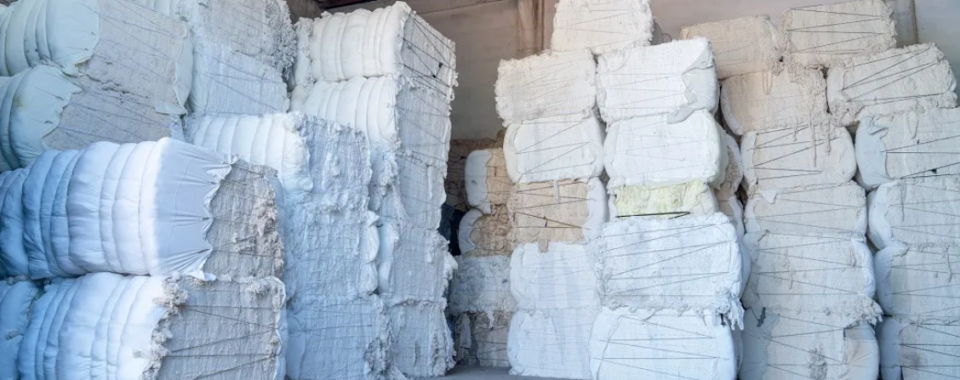
Supplies of cotton in India are tightening, after the Government’s procurement of 38 lakh bales at MSP began to dent market availability and prices, and even began to have an effect on the textile value chain. The CCI has procured 230.23 lakh quintals of seed cotton (kapas) till December 19, according to the procurement figures released by Cotton Corporation of India. This translates into 38.70 lakh bales of 170 kg cotton procured over the first 80 days of the 2025–26 marketing season, which commenced on October 1.
CCI has been procuring cotton at MSP, which is presently higher than the prevailing market prices. Consequently, due to CCI’s procurement and subdued demand from downstream industries, cotton prices in the domestic market are ruling high. CCI’s aggressive procurement in the ongoing 2025–26 season is creating a paradox for the downstream textile industry.
Though the support extended by MSP-based purchasing of cotton helped in maintaining farm gate prices, the considerable quantity of cotton that entered the CCI godowns reduced free market availability, in spite of lower sales of cotton yarn, fabric, and garments. As of December 19, 2025, the CCI acquired, based on procurement figures obtained by the Indian cotton community, 230.23 lakh quintals of kapas.
With an average lint recovery of 35 per cent, this means about 38.70 lakh bales. This has been effectively removed from the open market. The industry observers mention the importance of this moment for the withdrawal of cotton from the market. The rate of yarn absorption is low, stocks of fabric are adequate, and garments require cautious demands, both from home markets and exports.
Under such a demand scenario, it is observed that spinning margins are being pressed by the increasing cost of cotton because of lack of availability rather than contributing to the recovery of the value chain. This is primarily observed in central and southern India, where sourcing has been tilted. Telangana and Maharashtra combined constitute in excess of 60 percent of overall CCI purchase till now.
“While MSP procurement is a necessity during distress years, massive front-loading without a definitive road map for a smooth liquidation process is likely to trigger artificial tightness,” spinners have argued. “Since cotton is stuck in repositories, a disconnection has emerged between actual costs on one hand and realizations on the other,” of raw materials vis-a-vis final products due to cotton being stuck in warehouses with a disconnection arising “between actual costs on one hand and realizations
Industry players thus want to see a gradual and transparent spectrum of releases of CCI stocks, as per yarn and fabric demand cycles, to ensure equilibrium in the chain.