


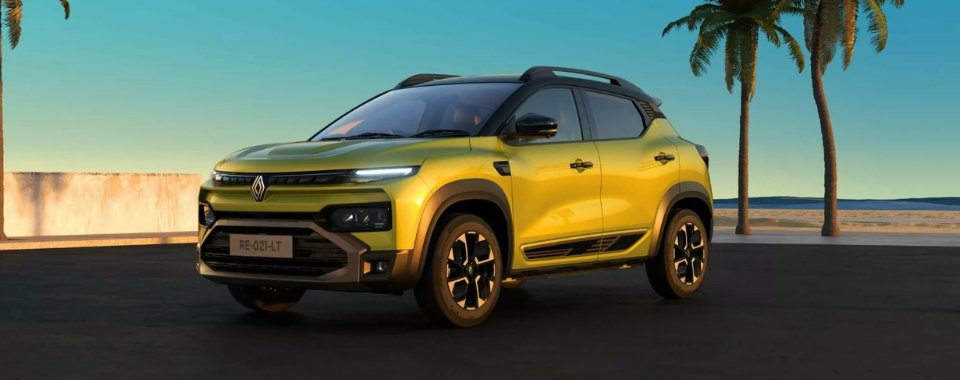
The French automaker Renault is currently executing an entirely new strategy for its business operations in India, and the approach revolves around two different platforms to improve the range of their cars. The first platform is meant to target vehicles that cost less than ten lakh rupees. On the contrary, the other platform refers to large-sized vehicles; hence, it will play an essential part in Renault’s electrification process. According to the company’s plans, there will be a total of seven new launches, including new SUVs and EVs, and the country will become a destination for software development until 2030.
Transition to new generation platforms:
There have been changes in the design strategy followed by Renault, and now the firm has switched to a new platform known as the Renault Group Entry Platform (RGEP). This move has been initiated by the automaker in response to the changing customer needs regarding features like factory-fitted CNG variants, improved engine capacity, and digital architecture, according to Stephane Deblaise, CEO of Renault Group in India.
RGMP to foster scale and electrification:
Simultaneously, Renault Group Modular Platform (RGMP) will come into play to enable scalability and electrification, which will act as a base for growth for Renault in India as well as a stepping stone for its electrification plan. The new product range will kick-start with the launch of the recently unveiled Duster SUV. As per Deblaise, RGEP is designed to cater to high value-for-money automobiles below Rs 10 lakh with an extension of a competitive product range that will last until 2030. Next-gen Kiger and Triber models will be introduced using this new platform.
Increasing market share and introducing new products:
The objective of Renault in the Indian market is to increase its market share to 5 percent by means of the new RGMP, which enables the company to enter the higher value segment. This platform is quite flexible in nature and can be used for various segments, starting from 4.0 meters up to 4.7 meters, which are capable of delivering high digital interactivity alongside multi-energy capabilities. Four new products including the Duster and Bridger will be rolled out by using this platform till 2030.
Electrification roadmap within E-tech solutions:
Apart from being a catalyst in expanding the product portfolio, the RGMP acts as the foundation stone of Renault’s electrification project, which includes a wide range of products. As noted by Deblaise, the adoption of electrification would vary depending on various parameters such as infrastructure and usages; thus, the RGMP is designed to provide an extensive range within the electrification roadmap within ‘E-tech solutions’ project, which includes strong hybrids and full electric vehicles, besides exploring super hybrids and e-4WDs.
Bridger would drive the transition phase:
Under the ‘E-Tech’ transition plan, Renault would initiate its transition phase progressively beginning from 2026, when the ‘Bridger’, a sub-4 metre SUV would become a key product during this phase. With the launch of Bridger, Renault would introduce a new 1.2 litre turbo engine and later develop its first fully electric car to be manufactured in India.
Global innovation centre in India:
Other than product-focused activities, India would play a pivotal role in Renault Group’s technology advancement and vehicle design, with the India Engineering Centre becoming a leading innovation hub regarding software technology. Deblaise indicated that the group’s team in India would evolve into a model year factory through continuous product development and upgrades.