


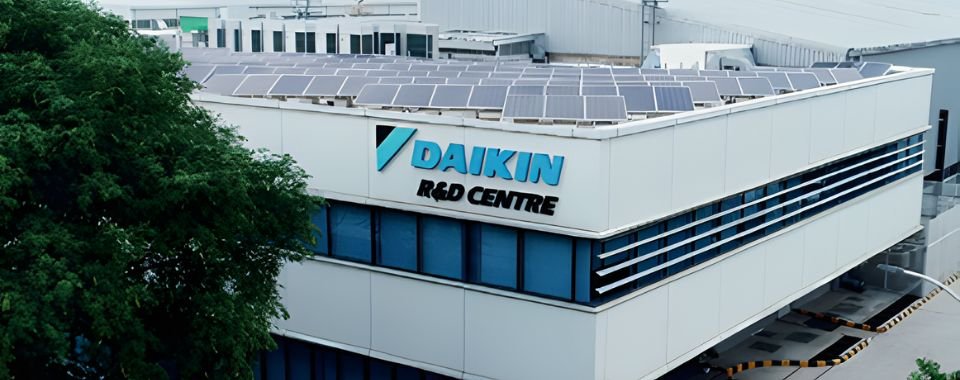
Daikin Industries plans to spend ₹1,000 crore in setting up a global research and development center in India. It would be the first facility of the company in any country other than Japan. This decision is an indication that the company aims to make India an important hub for all its operations, including manufacturing, product development, and exporting.
This global research center will primarily concentrate on developing software and products for cooling technology in areas like chillers and air conditioning. This facility will be established near the existing manufacturing unit of Daikin in Neemrana.
As many as 500 engineers are expected to be hired at the new R&D center, utilizing the engineering talent available in India. Company officials say that this initiative is part of their plan to make India the largest market for the company after Japan.
Data centre cooling, and manufacturing localisation are at the heart of this initiative:
The move is amid increasing demands for cooling equipment from data centers and commercial infrastructures. According to Daikin, it is already selling chillers to large data center projects in India, and it plans to localize manufacturing of this product range, using design concepts developed in Italy. This project is likely to require an additional investment of ₹200 crore.
Moreover, India is vital for Daikin’s future plans too. The firm is exporting to 54 countries but wants to increase this number to 100 countries as per its vision 2030 plan. Its export target is to generate a turnover of $4 billion out of India, along with positioning India as an assembly plant.
Having a total global turnover of more than $33 billion, Daikin is constantly growing globally. In India, the company earned a revenue of ₹13,000 crore last financial year, with growth rates of 8-9 percent. It aims to achieve an income of ₹15,000 crore by FY27.
Though the immediate need for air-conditioning room units will be affected due to climate changes, the company anticipates strong growth in industry-related segments and cooling applications in infrastructure.