



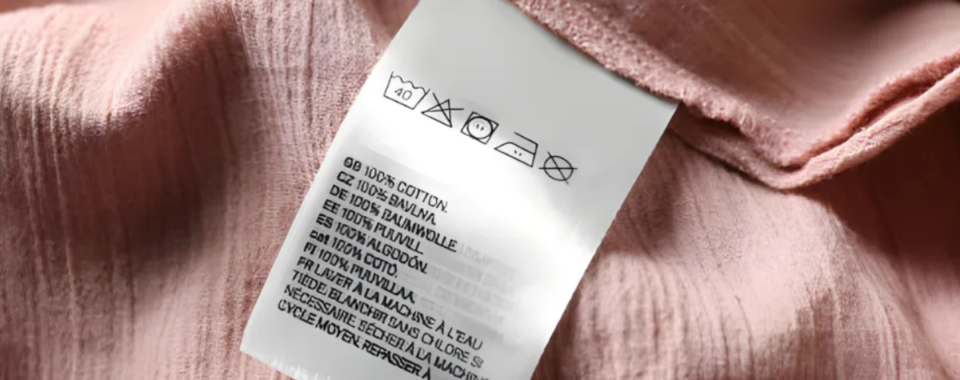
India is shortly going to implement a stringent labeling regime for garments and home textiles. This is set to increase transparency in quality in the sector. Under these regulations, producers are set to be compelled to supply a complete list of fibre content, country of origin, and exact treatment guidelines with regard to every single item sold in the country.
The Need for Effective Communication
This regulatory change is intended to safeguard consumers from deceiving claims and bring textile labeling in India on par with international standards. Although some of the details are currently mandatory under existing regulations, the forthcoming rule is set to make it uniform, stricter, and enforce the labeling of necessary product details on the cloth.
Characteristics of the New Labeling Regulations
1. Disclosure of Fibre Composition
The description has to state the precise percentage of total fibres used, which has to be in a descending order. This avoidsany sort of ambiguity, especially when it is a mixture of synthetics, as well as a blend of natural fibres.
2. Country of Origin Labeling
The following are the things that need to be included, which basically serve as additional requirements that need to be accomplished by the manufacturer: It has to state the location of the product’s origin and the origin of the materials used. This is not only a great way to make the supply chaintransparent, but it’s also a commendable move on behalf of the buyer concerning locally sourced products,
3. Accurate and Permanent Care Instructions
The packages need to have understandable and resilient care instructions, including washing temperatures, drying, and ironing. This increases the lifespan of the product, reduces damage from improper washing, and helps avoid unnecessary textile waste.
The Need to Bring India on a Global Standard
This move is in line with international norms, as practiced in markets such as the U.S. (Textile and Wool Acts of the FTC), as well as the European Union. In other words, India is moving to harmonize regulations to make exports simpler for textile producers, while simultaneously enhancing the international credentials of the textile industry.
How Consumers Benefit
The following are some of the benefits that the new regulations promise to bring to the Indian buyer:
Eliminating Deceptive Marketing: The need for transparency in fibre disclosure reduces the scope of misleading marketing.
Helping Recycling Processes: Having complete fibre details is essential for efficient textile sorting and helps support sustainability and a circular economy.
Extending Product Longevity: The use of adequate care instructions helps consumers maintain their clothes and home textiles longer. The industry is set to conform to this regulatory change, and the producers, trade bodies, and suppliers will have to modify the sourcing, production, and quality control practices to conform to these standards. Failure to comply will invite fines, thus emphasizing the government’s commitment to developing a robust consumer protection regime.